
Find Evansville Property Tax Records
Evansville property tax records are maintained by Vanderburgh County offices including the Assessor, Auditor, and Treasurer, giving property owners in southwestern Indiana's largest city online and in-person tools to look up assessed values, view and pay tax bills, search parcel data, and manage deductions from the county seat at 1 NW Martin Luther King Jr. Boulevard in downtown Evansville.
Evansville Property Tax Quick Facts
Vanderburgh County Tax Records Online
Evansville sits within Vanderburgh County, and all property tax records for the city flow through county offices. The Vanderburgh County Auditor's Office is at 1 NW Martin Luther King Jr. Blvd., Room 227, Evansville, IN 47708. Phone: (812) 435-5267. Fax: (812) 435-5530. Email: VandAuditor@vanderburghgov.org. The Auditor applies deductions, processes deed transfers, and certifies the tax duplicate used to calculate bills for every Evansville parcel.
The Treasurer, Brian Gerth, handles collection. His office is in Room 210 at the same main county building. Phone: (812) 435-5248. Online payments are available through the Treasurer's payment portal at billpay.forte.net. Property taxes in Evansville are due May 10 for the spring installment and November 10 for the fall installment. In 2025, the county noted that property taxes for 2024 payable 2025 spring installments were due May 12. Watch for any county extensions that can shift due dates by a day or two.
The image below shows the Vanderburgh County government portal where Evansville property tax information is published and maintained.
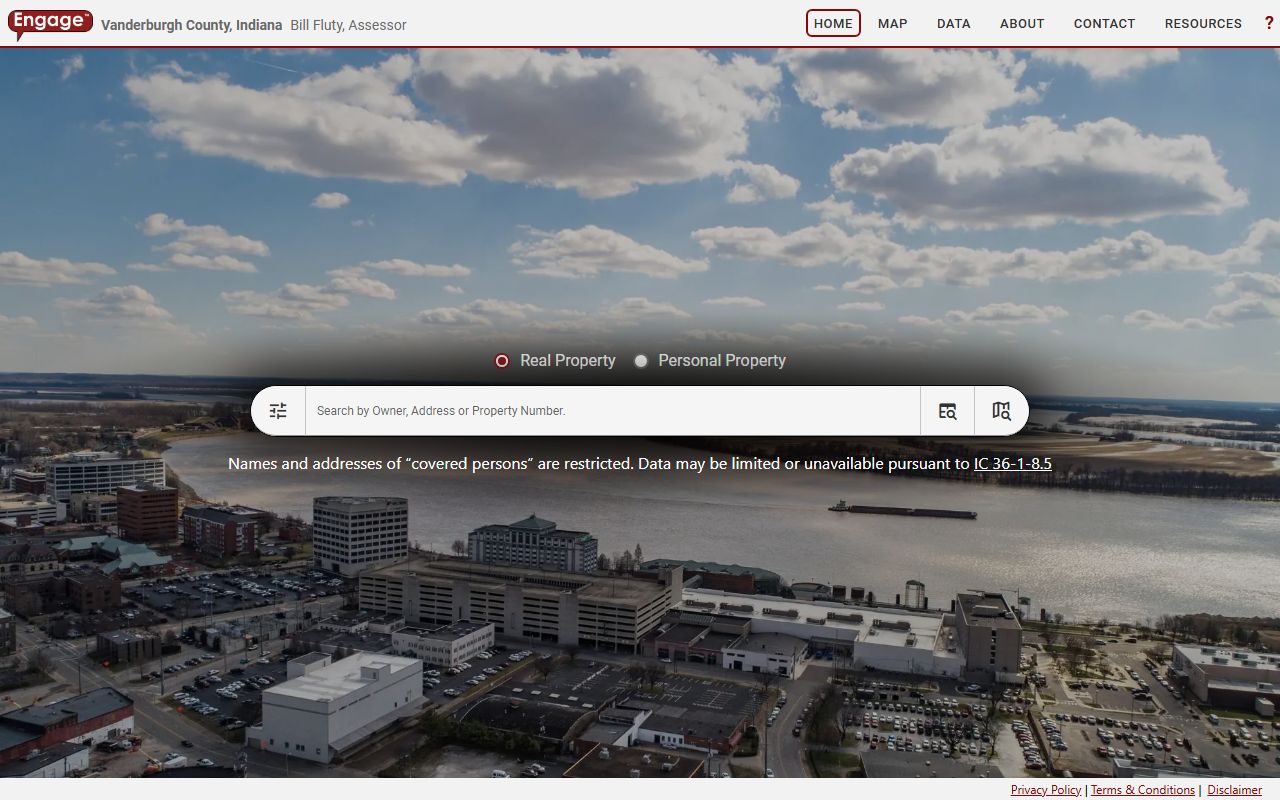
The county's online tools let you search Evansville parcels, view bills, and confirm payment status without visiting the courthouse.
XSoft Engage and Online Parcel Search
Vanderburgh County uses the XSoft Engage platform to provide public access to property assessment data for Evansville. This tool lets you search by owner name, address, or parcel number to pull up assessed values, tax history, and property details. It is one of the faster parcel search tools in the state and handles both city and rural county parcels in the same interface.
A second search option is the county's legacy tax search at treasurer.vanderburghcounty82.us. This older portal still works for tax bill lookups and shows payment history on Evansville properties. If you have trouble with one tool, try the other. They draw from the same data but present it differently. The Indiana Gateway Taxpayer portal at gateway.ifionline.org is a third option that works statewide and includes Vanderburgh County records.
Under IC 6-1.1-4, all Indiana property is assessed at its true tax value as of January 1. The Vanderburgh County Assessor's Office applies that standard to every Evansville parcel each year. If your assessed value changes significantly from one year to the next, you'll get a Form 11 notice showing the new value and the deadline to appeal.
Property Record Cards and Assessor Data
Property record cards for Evansville are accessible through the XSoft Engage portal. The card contains the physical characteristics the Assessor used to determine your property's value: lot size, building square footage, construction quality, condition, year built, and any additions or improvements. Reviewing the card is the right starting point if you think your Evansville property's assessed value doesn't match its actual condition or characteristics.
The Vanderburgh County Assessor's Office is in Room 227 of the county building, the same address as the Auditor. The Assessor can be reached at (812) 435-5267. If you find an error on your property record card, calling the Assessor first is usually the fastest path to a fix. Many assessment issues stem from data entry errors or outdated information rather than a fundamental disagreement about value, and those can often be corrected informally.
Homestead and Other Deductions in Evansville
Indiana's deduction system under IC 6-1.1-12 gives Evansville homeowners several ways to reduce the taxable value of their property. The standard homestead deduction applies to your primary residence. A supplemental homestead deduction provides a second reduction on top of the first. Both are administered by the Vanderburgh County Auditor. You only need to file once unless your status changes. If you refinance or sell and buy a new home, you need to re-file.
Seniors 65 and older who meet income and assessed value limits can apply for the Over 65 deduction or the Over 65 Circuit Breaker, which caps your property tax as a percentage of income. Totally disabled veterans, blind or disabled homeowners, and those with qualifying alternative energy systems also have deduction options. Applications for all deductions must reach the Auditor by January 5 to take effect for the next tax year. The Auditor's office can answer questions about which deductions you qualify for and what documents you need to bring.
Appealing Your Evansville Property Assessment
If you want to challenge the assessed value of your Evansville property, start with your property record card. Look for factual errors first: wrong bedroom count, incorrect lot size, improvements listed that were never made, or condition ratings that don't match the actual state of the building. These can often be fixed without a formal appeal. Call the Assessor at (812) 435-5267 and describe what you found.
For a formal challenge, file Form 130 with the Vanderburgh County Property Tax Assessment Board of Appeals (PTABOA). The deadline is June 15 each year, following the April 30 mailing of Form 11 notices. The appeal process is governed by IC 6-1.1-35. The PTABOA schedules hearings, reviews evidence on both sides, and issues a written decision. If the board rules against you, the next step is the Indiana Board of Tax Review. After that, you can take the case to Indiana Tax Court. Most Evansville property owners reach a resolution well before it gets that far.
Tax Bills, Penalties, and Delinquent Accounts
Vanderburgh County mails tax bills in advance of each installment due date. The spring bill is due May 10 and the fall bill is due November 10 under IC 6-1.1-22. Missing a due date costs you. A 5% penalty applies within the first 30 days after the deadline. After 30 days, the penalty rises to 10%. Interest also accrues on unpaid balances. Evansville property owners who fall behind should contact the Treasurer at (812) 435-5248 to discuss their situation before the account gets certified for tax sale.
Delinquent properties in Evansville go through the same process as elsewhere in Indiana. The Treasurer certifies unpaid accounts to the Auditor by July 1. The county then schedules a public tax sale. Paying the full delinquent amount before the sale date stops the process. After the sale, the original owner still has a redemption period to pay off the purchaser's lien and reclaim the property. Once redemption expires without payment, the purchaser can pursue a tax deed through the courts.
Vanderburgh County Property Tax Resources
All Evansville property tax records run through Vanderburgh County. For the full county overview including contact details, deduction forms, and search tools, see the county page below.